I have walked through a lot of Norwegian homes, from cramped Oslo apartments to glass boxes hanging over the Hardangerfjord, and the market still surprises me. Real estate in Norway is expensive by most European standards, yet it feels reasonable the moment you compare it to Stockholm, Zurich, or anywhere within two hours of a major ski resort. The average home in Norway now sells for around 650,000 to 700,000 NOK (roughly 60,000 to 65,000 USD), but that number tells you almost nothing about the top of the market, which is where this article spends most of its time.
If you are shopping in the luxury bracket, you are probably weighing Oslo penthouses against waterfront cabins on the south coast or something with a fjord view and a sauna. Those are three very different purchases. Here is what each one costs, what the process looks like, and where I think the value sits right now.
What Luxury Property in Norway Actually Costs
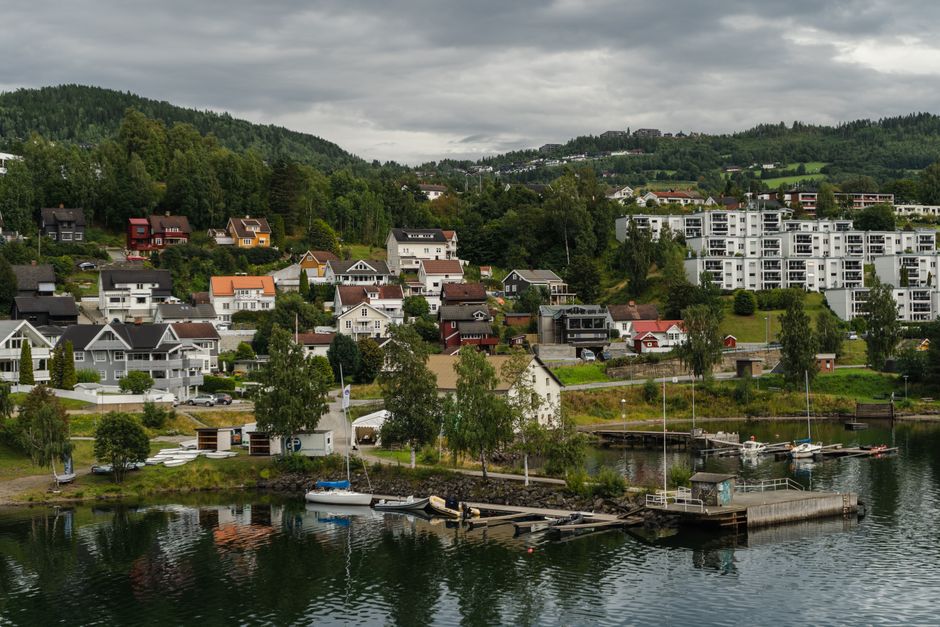
Prices have climbed hard since 2020, dipped slightly through the rate hikes of 2022 and 2023, and then firmed up again as the Norges Bank signaled rates had peaked. Luxury stock moves on its own rhythm, though. There simply isn’t much of it, and the good properties rarely sit on finn.no for more than a few weeks.
Rough numbers as of early 2025:
| Location | What 15 to 40 million NOK buys | Price per sqm |
|---|---|---|
| Central Oslo (Frogner, Bygdøy, Aker Brygge) | Penthouse or large apartment, 150 to 300 sqm | 110,000 to 160,000+ NOK |
| Oslo west suburbs (Holmenkollen, Vinderen) | Detached house, 300 to 450 sqm, garden | 70,000 to 100,000 NOK |
| Bergen and surrounding coast | Waterfront villa, often 200 to 400 sqm | 55,000 to 80,000 NOK |
| Telemark and the southern coast (Larvik, Risør area) | Seafront holiday home, private dock | 45,000 to 75,000 NOK |
| Fjord properties (Hardanger, Sognefjord, Geiranger area) | Architect-designed villa with dramatic views | 35,000 to 70,000 NOK |
One caveat: fjord pricing is wild. Two houses that look ide
 ntical on paper can differ by 10 million NOK because one sits in perpetual shade from October to February. Ask about sun hours in winter. Every serious agent knows this figure for their listings, and Norwegian buyers ask for it by reflex.
Where the Money Is Going
Oslo’s west side still rules
Frogner, Bygdøy, and the streets climbing toward Holmenkollen remain the address market. A renovated 200 sqm apartment in Frogner runs 25 to 35 million NOK. That sounds steep until you remember a comparable place in central Stockholm or Copenhagen costs noticeably more, and Oslo gives you a 20-minute tram ride to a ski slope. The city is small, walkable, and safe, which explains why foreign buyers keep circling it.
The southern coast is the sleeper
Norwegians have summered in Telemark and the Skagerrak coast for generations, and that heritage shows in the housing stock. Old wooden villas from the 1890s sit next to sharp modern builds, nearly all with private moorings. A genuine seafront house with its own dock and swimming water starts around 12 to 15 million NOK. My honest take: this stretch offers the best quality-of-life return in the country right now, because prices have lagged Oslo by years while the ferry and flight connections improved.
Fjord properties are a niche bet
These are the properties that fill Instagram feeds, and some are genuinely spectacular. But you are buying isolation. The village of Undredal on the Aurlandsfjord has about a hundred residents and roughly as many goats. If that appeals to you on a Tuesday evening in November, wonderful. If not, rent one for a summer before you commit 20 million NOK.
Can Foreigners Buy Real Estate in Norway?
Yes, and it is refreshingly simple. Norway imposes no general restrictions on foreign buyers. You do not need residency, a visa, or a local company. You can buy an Oslo apartment from your desk in London or Dubai and the legal process is identical to a Norwegian citizen’s. The one exception is agricultural and forest land, which requires a concession from the municipality. There is also a requirement that you actually live in the property yourself if it is agricultural land, so the fjord-farm-with-a-view fantasy has some paperwork attached.
Financing is the real hurdle for non-residents. Norwegian banks will lend to foreign buyers, but expect a 30 to 40 percent down payment requirement and a lot of documentation about your income. Cash buyers skip all of that, and frankly, at this price level, most transactions I see are cash or close to it.
The Costs Nobody Mentions Upfront
This is where first-time buyers in Norway get caught out. The sticker price is not the full picture:
- Document tax (stamp duty): 2.5 percent of the purchase price, paid by the buyer. On a 25 million NOK home, that is 625,000 NOK.
- Estate agent fee: roughly 1 to 2 percent, customarily paid by the seller, but it is baked into the price you are bidding on anyway.
- Home survey: optional but smart, around 8,000 to 20,000 NOK for a thorough condition report.
- Wealth tax: this one matters for the luxury segment. Net wealth above about 1.7 million NOK (single) or 3.4 million NOK (coupled) is taxed at around 1 percent, and second homes count toward it.
- Running costs: property tax varies by municipality, some charge zero, and expect 5,000 to 25,000 NOK per year for snow clearing, boat docks, and shared fees on water and sewage.
The wealth tax deserves a second read. Norway taxes wealthy residents on their assets, and it has pushed more than a few high-net-worth Norwegians to Switzerland. If you plan to actually move to Norway, talk to a Norwegian tax advisor before you buy, not after.
How a Purchase Actually Works
Norwegian real estate runs on an open bidding system, and it moves fast. Here is the sequence:
- Find the listing, usually on finn.no, and attend the viewing (visning). Open house days are standard and often crowded.
- Register your interest with the agent. This signals you intend to bid.
- The bidding round opens, usually the evening after the viewing, on a digital platform like acceptbud.no.
- Bids are binding once accepted. There is no cooling-off period, no subject-to-financing escape clause once the deal is struck. Bid only with money you have.
- The buyer signs the contract electronically, typically within days.
- Completion happens four to eight weeks later, when funds transfer and you get the keys.
That binding-bid rule terrifies foreign buyers the first time, and it should. I have seen people lose 200,000 NOK deposits because they bid above their pre-approved financing. Get the bank’s approval letter before the viewing, not after.
How Norway Compares to Sweden and Switzerland
Sweden gives you more house per krone and a bigger market, but its currency swings and its luxury stock in Stockholm is thinner than it looks. Switzerland is gorgeous and politically stable, but foreign buyers there face quotas, permits, and prices that make Oslo look like a bargain. Norway sits in a sweet spot: no restrictions, transparent pricing, strong property rights, and nature on a scale neither neighbor can match. The weakness is liquidity. If you need to sell a 30 million NOK fjord villa quickly, you will feel it. Plan on a 3 to 6 month sale window for luxury properties in Oslo and 6 to 12 months anywhere rural.
Mistakes I Keep Seeing
The most common one is buying a dark house. Norwegian winters are long, and a house facing the wrong way gets depressing by February. The second is underestimating distances. A property 40 minutes from Oslo by car might be 90 minutes in January with studded tires and snow. The third is skipping the survey because the house looks new. Modern Norwegian builds are generally excellent, but shortcuts during the 2015 to 2021 construction boom exist, and the 20,000 NOK inspection is cheap insurance on a 20 million NOK purchase.
The Short Version
If you want a liquid asset and city life, buy in west Oslo or Aker Brygge and accept the price. If you want the best value in Norwegian luxury property right now, I would look hard at the southern coast between Larvik and Risør, where seafront homes still trade at 60 to 70 percent of what an equivalent Oslo property commands. And wherever you buy, get the financing sorted before the viewing. In this market, the fastest bidder wins, and the fastest bidder is always the one who came prepared.