Real estate in Denmark has quietly become one of the most talked-about property markets in Northern Europe, and I get why. Prices are high but not insane, the buying process is unusually transparent, and Copenhagen keeps ranking among the most liveable cities on the planet. If you are sitting in Reykjavík watching Icelandic mortgage rates climb past 10% (as they did in 2024), a Danish fixed-rate loan at around 3-4% looks almost suspiciously attractive.
I have spent months digging into this market, partly out of curiosity, partly because three friends from home have bought apartments in Copenhagen and Aarhus over the last two years. This guide is what I wish someone had handed them.
How Expensive Is Danish Property, Really?
Let us start with numbers, because vague statements about “expensive Scandinavia” help nobody.
| Location | Average price per m² (approx.) | Typical 80 m² flat |
|---|---|---|
| Copenhagen (central districts) | DKK 55,000-75,000 (€7,400-10,000) | DKK 4.4-6 million |
| Copenhagen suburbs | DKK 32,000-45,000 | DKK 2.6-3.6 million |
| Aarhus | DKK 30,000-42,000 | DKK 2.4-3.4 million |
| Odense | DKK 22,000-30,000 | DKK 1.8-2.4 million |
| Rural Jutland | DKK 10,000-18,000 | DKK 0.8-1.4 million |
For comparison, central Reykjavík sits around ISK 850,000-1,100,000 per square metre, which converts to roughly
 the same as central Copenhagen. The difference is what you earn versus what you pay. Danish wages and financing terms make the ratio kinder, and there is far more stock to choose from.
Can Foreigners Actually Buy in Denmark?
This is the part where most guides get vague, so let me be blunt. Denmark is restrictive. Non-EU citizens need permission from the Danish Ministry of Justice to buy property, and that permission is not automatic. You generally need to have lived in Denmark for at least five years, or demonstrate very strong ties to the country.
EU and EEA citizens have it easier. And here is the part that matters if you hold an Icelandic passport: Iceland is in the EEA, so as an Icelandic citizen you fall under the same rules as EU nationals for most purposes. You can buy a holiday home or an apartment without the ministry’s blessing, though there are still rules around summer houses in coastal zones.
The holiday home exception
Denmark regulates holiday homes (sommerhuse) through zone laws. Large parts of the Danish coastline are protected, meaning you cannot just buy and rent out a beach house year-round as an investment. Rentals are capped at 56 nights per year in most protected zones unless you get a rental permit. Plenty of foreign buyers learn this after signing. Do not be one of them.
What the Buying Process Looks Like
Danish property transactions are refreshingly boring, and I mean that as a compliment. There is no sealed-bid chaos like Scotland, no gazumping culture like England.
- You view the property and make a written offer through the estate agent (ejendomsmægler).
- The seller accepts, and you pay a deposit, usually 10% of the price, held by the agent or a lawyer.
- A purchase agreement is drawn up, and you have a legal right to inspect the property (bygningssagkyndig to-prøve) before finalising. This includes a technical survey covering hidden defects for up to ten years.
- You sign the final deed at a notary (fogedretten) and take possession. Total timeline: four to eight weeks.
One thing I genuinely rate: Denmark’s tinglysning system, the digital property register. Ownership, mortgages and easements are all registered electronically and instantly. Chain breaks are rare because everything is visible before you commit.
Hidden Costs That Catch People Out
The asking price is not the price. Say it to yourself twice.
- Estate agent and registration fees: around 0.6% of the price plus DKK 1,660 in stamp duty, capped at DKK 25,000 for the fee portion.
- Deed tax: 1.5% of the property value, plus 0.5% on any mortgage registered. On a DKK 4 million flat, that alone is DKK 60,000 plus mortgage duty.
- Buyer’s share of the property-survey insurance: typically DKK 4,000-7,000.
- Mortgage setup: Danish banks charge an establishment fee, often 0.5-1% of the loan.
Budget an extra 3-4% on top of the purchase price and you will not be surprised. My friend who bought in Vesterbro forgot the mortgage duty and had a genuinely bad month.
A Quick Word on Danish Mortgage Bonds
If you are coming from a market with unpredictable rates, the Danish mortgage system will feel strange in the best way. Loans are funded through covered mortgage bonds (realkreditobligationer), a system running since 1797. It survived the 2008 crash without a single bank bailout of mortgage institutions. Fixed 30-year rates have hovered around 3-4% recently, with a down payment requirement of 5% for owner-occupied homes plus your own transaction costs.
The catch for foreign buyers: you need a Danish bank, and they want income documentation and often a Danish CPR number or at least documented Nordic income. Icelandic income is usually workable since the banks know the market, but expect more paperwork than a local would face.
Which Areas Are Worth Your Attention?
Copenhagen gets the headlines, but the interesting value is elsewhere, in my opinion at least.
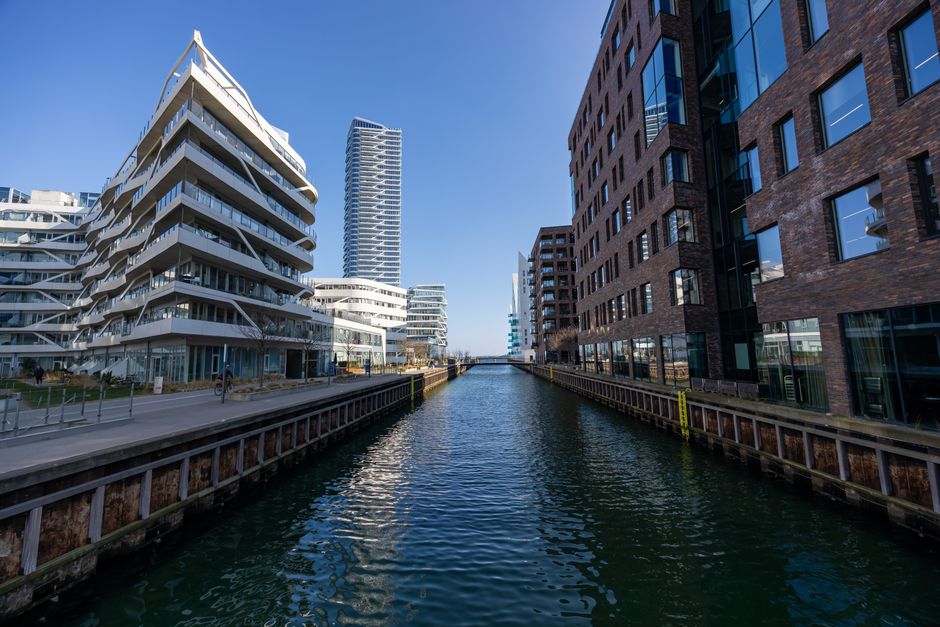
Copenhagen: Østerbro and Frederiksberg are the family-heavy, expensive quarters, DKK 55,000-70,000 per m². Nørrebro and Vesterbro are livelier and slightly cheaper, though the gap has narrowed badly since 2020. Islands Brygge and Sydhavnen have gone from industrial backwaters to genuinely desirable in a decade.
Aarhus: Denmark’s second city, a university town with a quarter of the population aged under 30. Prices run 30-40% below Copenhagen with better rental demand from students. If you are buying partly as an investment, Aarhus deserves a hard look.
North Zealand: Helsingør and Humlebæk, near the Louisiana Museum of Modern Art (worth the trip even if you never buy anything), attract second-home buyers with money. Expect DKK 40,000+ per m² for anything near the water.
Rural Funen and Jutland: old farmhouses and village homes for DKK 1-2 million. Cheap, charming, and empty in winter. Draw your own conclusions.
Is It a Good Time to Buy?
Danish house prices fell roughly 8% from their 2022 peak, then stabilised and edged back up through 2024. Nobody can promise you the bottom of a market, and anyone who does is selling something. What is more solid: interest rates have come off their highs, transaction volumes recovered in 2024, and Copenhagen’s chronic housing shortage has not gone anywhere. The city approved just under 5,000 new dwellings in recent years when the pipeline needed double that.
My honest read: you are not buying a bargain, but you are not buying a bubble either. That is a reasonable place to be.
The Takeaway
Do three things before you go any further. Confirm your legal status as an EEA buyer with a Danish lawyer who handles property, not a generalist. Get a mortgage pre-approval from a Danish bank so you know your real ceiling, not a guessed one. And budget 104% of the asking price from day one, including fees and duties. Real estate in Denmark rewards preparation more than luck, which is precisely why it suits careful buyers. The ones who get burned are the ones who treat it like buying a summer cabin back home.