I’ll be honest with you from the start: real estate in Bora Bora is not like buying a holiday flat on the Côte d’Azur or a villa in Mallorca. The island is barely 30 square kilometers, most of the desirable land sits on private motus around the lagoon, and the rules favor Polynesian buyers. That said, people do buy here, and prices per square meter on the water can run past what you’d pay in Paris or Monaco. If you’ve fallen for the place after a week at the Four Seasons or the St. Regis, here is what the buying process actually looks like, with real numbers.
Can foreigners even buy real estate in Bora Bora?
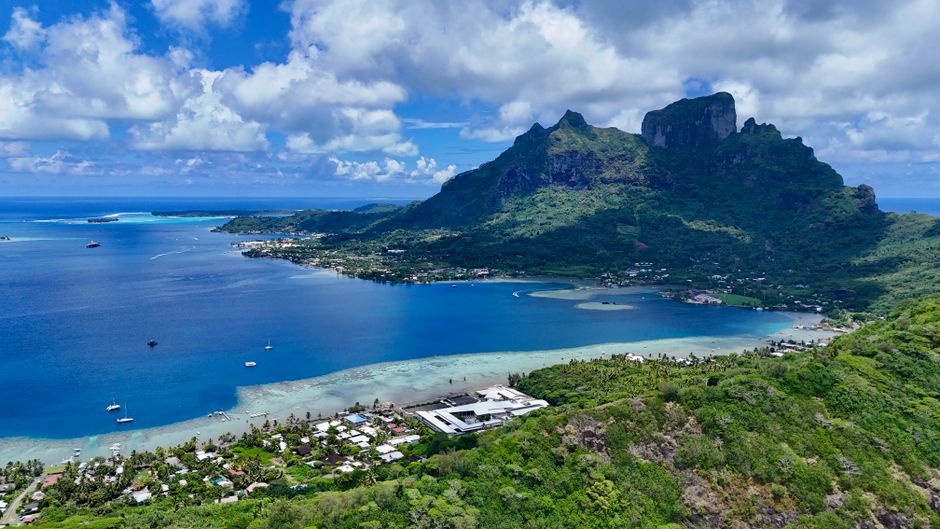
Not exactly, and this is the part most dreamers skip. French Polynesia is an overseas collectivity of France, but land law here has its own quirks. Freehold titles held by Polynesian families rarely come onto the market, and when they do, local buyers usually get first crack. What foreigners actually buy is a leasehold, called a bail emphytéotique, which is essentially a long lease of 35, 45, or in some cases up to 99 years, renewable.
Every non-French buyer also needs authorization from the local government, specifically the direction de l’économie rurale, before any transaction goes through. The process is not brutal, but it adds two to four months and a stack of paperwork. My advic
 e: use a local notary from day one, not a mainland French one. The local notaries know which families genuinely hold clean titles and which plots come with customary disputes that have simmered for decades.
What does property actually cost?
Numbers time. Bora Bora splits into three markets: the main island around Vaitape, the hillside, and the private motus. Each behaves very differently.
| Property type | Typical price range | Notes |
|---|---|---|
| Inland or hillside home (main island) | 250,000–600,000 EUR | Views over the lagoon, but no direct beach access in most cases |
| Lagoon-front villa (main island) | 1.5–4 million EUR | Very few listings per year; often sold quietly by word of mouth |
| Motu leasehold (raw land, 45–99 years) | 800,000–3 million EUR | You build on top of the lease; construction adds 5,000–8,000 EUR per m² |
| Completed overwater or motu residence | 5–15 million EUR | Rarer than hen’s teeth; almost never publicly listed |
One more cost people forget: getting building materials to a motu. Everything arrives by barge from Vaitape, and before that by cargo ship from Papeete, roughly 230 kilometers away. Builders I’ve spoken with quote a 30 to 40 percent premium on construction compared with Tahiti, which is itself pricier than mainland France. Budget accordingly or the math falls apart fast.
Overwater bungalows: the dream that is harder than it looks
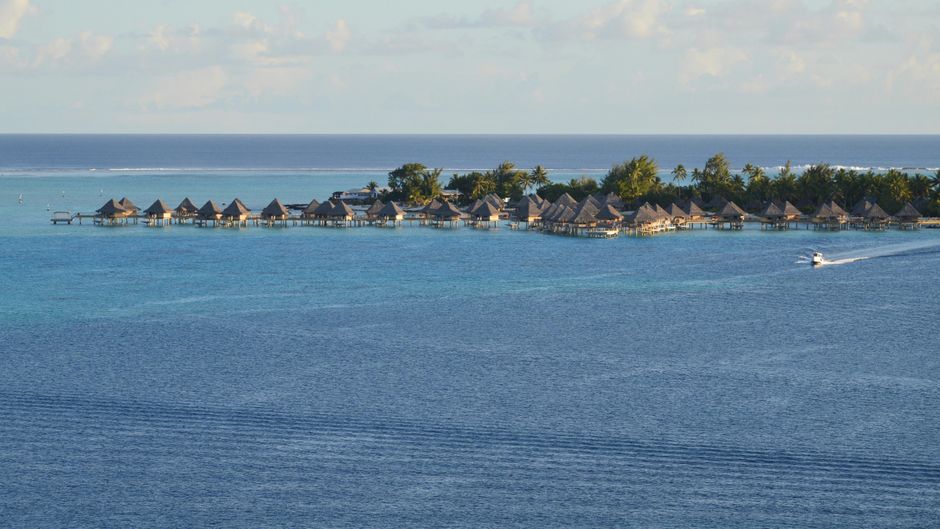
Here’s the question I get most: can I buy my own overwater bungalow? Technically, yes. A handful of private residences on stilts exist around the lagoon, and a few investors have negotiated leases on motu fringe areas to build them. But the environmental permitting is serious business. The lagoon around Bora Bora is protected under local maritime regulations, and approvals involve the environmental service, the marine authority, and often the commune. Expect 12 to 18 months of paperwork before a single pole hits the water.
There’s also the maintenance reality. Salt water eats everything, and cyclone-season swells, while Bora Bora sits outside the main cyclone belt, still bring heavy weather between November and March. Insurance for overwater structures is expensive and, with some insurers, simply unavailable. I know of one owner who self-insures because no underwriter would touch his deck. That should tell you something.
Where should you actually look?
Three areas dominate the market.
- Vaitape and the west coast. The main village side. You get practicality: shops, the ferry dock, school access, and staff who can actually commute to your property. Prices are the most reasonable, if anything on this island can be called reasonable.
- Matira Point. The only real public beach, on the southern tip. Hotels cluster here, so free parcels barely exist. When one traded a few years back, it went for well over the asking price within weeks.
- The motus: Tupai, Motu Piti Aau, Toopua. The private islets ringing the lagoon. This is where the fantasy real estate in Bora Bora lives. Leases here suit buyers who want privacy above all, ideally with a seaplane or boat arrangement already sorted.
Personally, if I had the budget, I’d take a smaller lagoon-facing property near Faanui Bay over a big nameless motu. The north of the island is quieter than Matira, the sunsets face you rather than away from you, and you can still reach Vaitape in ten minutes by boat.
Does it work as an investment?
Sometimes. Let’s run rough numbers. Luxury villas on Bora Bora rent for 2,000 to 6,000 EUR per night in high season, and hotel occupancy island-wide runs above 80 percent between June and September plus the December holidays. A well-managed three-bedroom villa doing 120 rented nights a year at 3,000 EUR could gross around 360,000 EUR. Against a 3 million EUR purchase plus maybe 1 million in build or renovation costs, that’s a gross yield somewhere in the 6 to 9 percent range before management fees, maintenance, and the 4 to 5 percent commission a rental agency takes. That is not a passive income machine, but it beats a lot of Caribbean markets with similar prestige, and appreciation has been steady. Lagoon-front leaseholds near the big resorts have historically resold at healthy premiums because supply just doesn’t grow.
The catch is resilience. When international travel collapsed in 2020, Bora Bora went from packed to empty in a month, and owners with debt had a rough couple of years. If you’re leveraged to the eyebrows, this market will test your nerves.
The pitfalls nobody puts in the brochure
- Lease length versus building cost. Signing a 35-year lease and spending 5 million EUR on a villa you must eventually leave is a terrible trade. Push for 60 years minimum on any motu deal.
- Title problems. Customary land claims surface years after a purchase. A local notary and a title history check are non-negotiable. I’d also insist on a customary land survey signed off by the family representatives.
- Resale liquidity. There might be a dozen serious buyers per year for the top of this market. If you need out quickly, you’ll take a haircut of 10 to 20 percent.
- Running costs. Electricity on the island is generated largely by imported fuel, so bills for an air-conditioned villa can top 2,000 EUR a month. Fresh water, staffing, and boat fuel add more.
- Tax residency traps. France and French Polynesia have their own tax regimes, and Polynesia levies its own taxes on rental income. Get advice on both before, not after, you sign.
Quick answers to common questions
Do I need to be a resident to buy?
No, but non-resident purchases require government authorization, and the process is slower for buyers without French or Polynesian ties. Some buyers find it smoother to buy through a French SCI property company, though that adds setup cost of a few thousand euros.
Is it cheaper to build than to buy?
On the main island, usually yes, if you already hold a lease. On a motu, often no, once barge logistics and marine works come into play. Do a full cost study before assuming the build route saves you anything.
How long do transactions take?
Plan on six to nine months from accepted offer to keys. Government authorization alone eats several months, and financing from banks like Banque de Tahiti or Banque Socredo moves at island pace.
My honest takeaway
Real estate in Bora Bora rewards exactly one type of buyer: someone who wants a legacy property they’ll keep for decades, run properly, and pass on. If you’re chasing quick yields or a flip, look at Bali or Portugal instead. But if the goal is a family footprint on the most famous lagoon in the world, negotiate a long lease, hire the local notary everyone respects, budget 15 percent more than feels comfortable, and be patient. In a market this thin, the good deals go to the people still standing when a family finally decides to sell.