I have spent enough evenings scrolling Danish property portals (Boligsiden and Boliga, if you want the real ones) to know that real estate in Copenhagen Denmark confuses people. The city looks compact, the prices look high, and the rules for foreign buyers look genuinely strange the first time you read them. All three impressions are correct. But the market rewards preparation, and once you understand how it works, Copenhagen becomes one of the more honest luxury markets in Europe. Prices are publicly recorded. No shadow bidding culture like London or New York. What you see on Boliga is what your neighbor paid.
Here is my attempt to put everything a serious buyer needs in one place, based on prices I checked this month and conversations with agents who work the top end of the market.
What does property in Copenhagen actually cost right now?
Lets start with the numbers, because they are less scary than the rumors suggest. The average price per square meter across Copenhagen sits around DKK 47,000-52,000, which is roughly EUR 6,300-7,000. For context, that is below Paris, well below central London, and roughly on par with good districts in Amsterdam or Hamburg.
The catch is the top end. Premium apartments in Frederiksberg and Indre By regularly trade at DKK 75,000-95,000 per square meter, and the true trophy properties, the penthouses with harbor views or the historic townhouses in Nyboder, go past DKK 100,000 per square meter without blinking.
| Area | Approx. price per m2 | Character |
|---|---|---|
| Indre By (city center) | DKK 70,000-95,000 | Historic, walkable, touristy, low supply |
| Frederiksberg | DKK 65,000-85,000 | Leafy, embassies, best schools, classic luxury |
| Osterbro | DKK 55,000-70,000 | Calm, family-heavy, near the lakes and Faelledparken |
| Islands Brygge | DKK 55,000-75,000 | Harborfront, modern builds, swimmable harbor baths |
| Norrebro | DKK 45,000-60,000 | Trendy, dense, younger buyers, food scene |
| Refshaleoen | DKK 45,000-65,000 | Industrial-chic, creative, CopenHill views |
One thing that surprises people: Danish square met
 ers are quoted as gross floor area including walls and shared space allocation, so a 120 m2 Copenhagen apartment is smaller inside than a 120 m2 apartment in Berlin. Budget accordingly.
Can foreigners even buy real estate in Copenhagen?
Yes, but the rules split buyers into groups, and this is where real estate in Copenhagen Denmark differs from almost everywhere else in Europe.
- EU/EEA citizens can buy freely, no permission needed, as long as the property is your year-round residence or you have a valid residence permit. You cannot buy a pure holiday home as a non-resident EU citizen.
- Non-EU citizens need approval from the Danish Department of Civil Affairs (Justitsministeriets Departement, often called the Justice Ministry permission). Expect the process to take 2-4 weeks if your paperwork is clean. You generally need to prove residence in Denmark, and there are strict rules about total property value.
- Limited liability route: some non-EU buyers purchase through a Danish ApS (private limited company). It works, but the property is then taxed as a company asset and the mortgage options narrow. Talk to a Danish tax advisor before you do this, seriously.
Limited companies and funds can also buy commercial property, and since 2023 the rules around investor-owned apartments have tightened. The government wants residents, not portfolios, and I think that is partly why the center of Copenhagen still feels like a city people live in rather than a hotel district.
Which neighborhoods are worth the money for luxury buyers?
Frederiksberg: the safe answer
Frederiksberg is technically its own municipality inside Copenhagen, and it shows. Wider streets, better schools, actual gardens, and the French-style vibe around Allégade and the Theater. The classic luxury play here is a 1900s apartment with high ceilings, stucco, and a balcony over the boulevard. Expect to pay DKK 12-18 million for 150-200 m2 in good condition. These apartments hold value stubbornly. In the 2022-2023 downturn, Frederiksberg prices dipped maybe 5 percent while Norrebro fell double that.
Indre By and Nyhavn: the postcard
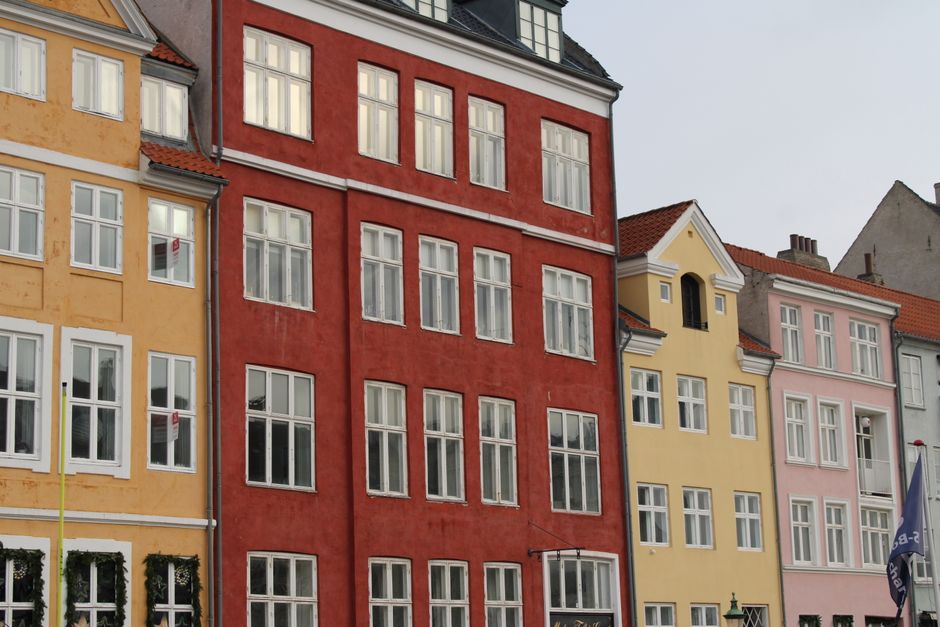
The harborfront around Nyhavn and the streets behind Kongens Nytorv are what people picture when they think of Copenhagen. Supply is tiny, views are protected, and the buyers competing with you are often Danish wealth plus international money. A renovated apartment in one of the old merchant houses can hit DKK 25 million. Is it the smartest purchase per square meter? No. Is it the one you will brag about? Also no, because Danes are too polite to brag. But it is the one you will never regret walking home to.
Islands Brygge and the harbor: the modern option
If you want new construction, glass, and a harbor bath 90 seconds from your door, this is your area. The southern harbor has seen serious development since 2015, and quality varies more than agents admit. Some 2016-era builds already have facade issues. My advice: get a building surveyor (bygningssagkyndig) even on new builds, and check the Ejerlejligheds report for the building fund.
What are the total costs of buying? (The part agents underplay)
The asking price is maybe 85 percent of your real budget. Here is the honest list:
- Transfer tax (stempelafgift): 0.6 percent of the purchase price, plus DKK 1,660 in registration fees. On a DKK 15 million apartment that is DKK 91,660.
- Buyer’s agent: 1-2 percent plus VAT if you use one. Danish buying agents are less common than in the US but increasingly standard at the luxury end.
- Surveyor and lawyer: DKK 15,000-40,000 depending on complexity.
- Mortgage setup: Denmark has realkreditlån (mortgage bonds) with setup fees around 1.5 percent of the loan, some of which rolls into the loan itself.
- Building fund contribution: for apartments, the building’s reserve fund contribution is listed in the sales material and can be DKK 50,000-200,000 on older properties. Read this number. It is real money.
So on a DKK 15 million purchase with a mortgage, figure DKK 400,000-500,000 in total transaction costs before you move a single box.
How does the Danish mortgage system work (and why is it oddly great)?
This is the part of real estate in Copenhagen Denmark that deserves more attention than it gets. Denmark invented mortgage bonds in 1797, and the system is still the gold standard. Your loan is funded by bonds sold on the open market, which means your interest rate reflects the actual market, not a bank’s margin.
You can currently borrow up to 80 percent of property value through a realkredit loan. The remaining 20 percent comes from savings or a bank loan. Fixed rates have sat in the 3-5 percent range through 2024 and early 2025, and here is the fun part: Danish fixed-rate mortgages allow you to buy back your own debt at market price. If rates rise, your loan is worth less than face value, and you can settle it at a discount. People did this in 2022-2023 and saved real money. It is a genuinely unusual feature, and I have never understood why other countries do not copy it.
Non-residents can get mortgages, but expect 60-70 percent LTV and more paperwork. Danske Bank and Nykredit both have international desks that handle this weekly.
Is Copenhagen property a good investment, or just a nice place to live?
My honest opinion: both, with a lean toward lifestyle. Yields on central apartments run 3-4 percent gross, which will not excite anyone comparing against Lisbon or Dubai. But Copenhagen has structural scarcity. The city adds roughly 10,000-12,000 residents a year while completing far fewer homes, construction costs have risen about 30 percent since 2020, and the harbor protection rules cap height and density downtown.
Long-term price appreciation has been strong. An Osterbro apartment bought for DKK 5 million in 2015 was worth around DKK 8-8.5 million at the 2025 market peak, even after the correction. Meanwhile, rental demand stays high because younger Danes buy later than their parents did.
If pure yield is your goal, look at Amager or the Nordhavn edge districts. If you want the asset you enjoy living in while it quietly compounds, Frederiksberg and Osterbro are where I would put my own money.
What mistakes do foreign buyers make most often?
After watching this market for years, the patterns repeat. People skip the local agent because they think the process is like home. People underestimate the building fund obligations. People ignore the monthly ejerudgift (owner’s monthly fee), which covers property tax, water, heating, insurance, and the reserve fund, and can run DKK 3,000-8,000 a month depending on the building. And people assume the 0.6 percent transfer tax is the whole cost picture, which it never is.
The other classic: falling in love in July. Copenhagen in summer does things to your judgment. Visit in November too. If the apartment still feels right when it is dark at 4 pm and raining sideways, buy it.
Quick takeaways
Real estate in Copenhagen Denmark rewards three things: picking the right district over the right apartment, reading the building’s finances before you fall in love with the kitchen, and getting pre-approval early because cash buyers move fast on the good stuff. Properties in the DKK 10-20 million range sell in 30-60 days when they are priced right, and the best ones never even hit the portals. Get on agents’ private lists in Frederiksberg and Indre By, and you will see inventory most buyers never know exists. That single move probably matters more than timing the market.