Real estate in Innsbruck has a strange pull on people who could live anywhere. I know a Zurich banker who sold his lake-view apartment and bought a hillside villa above the city for less than half the money. He now skis 40 mornings a year before nine o’clock. That is the pitch, and honestly, it holds up.
Innsbruck hosted the Winter Olympics twice, in 1964 and 1976, and the city still behaves like a capital of Alpine sport. Roughly 130,000 people live here, the university keeps the average age down, and the airport sits a ten-minute taxi ride from the centre. Munich is ninety minutes away by train, Vienna four hours. So the real question with real estate Innsbruck is not whether the city is livable. It is whether the market gives you a fair deal. Mostly it does, with a few traps worth knowing before you sign anything.
What luxury property in Innsbruck actually costs
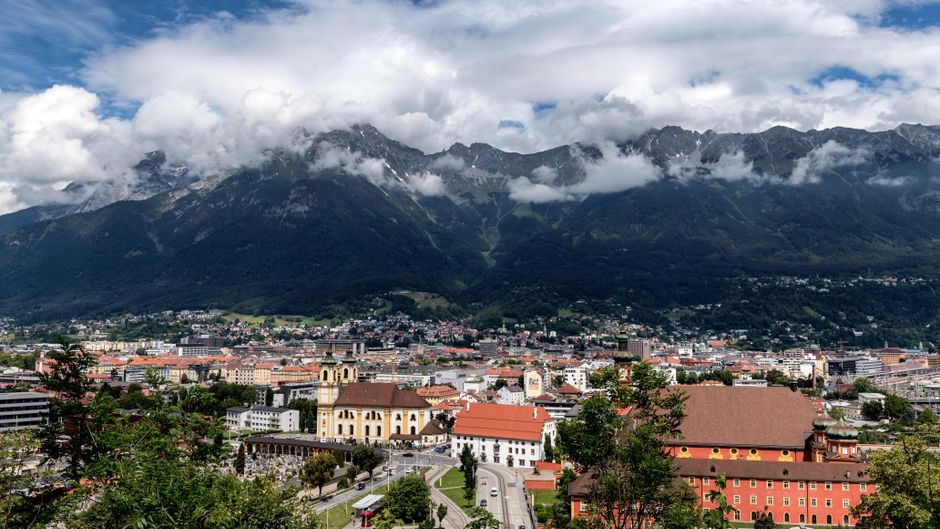
Let’s talk numbers first, because Alpine real estate attracts a lot of romantic talk and very little price transparency. Across Innsbruck, the average transaction sits somewhere around €5,500 per square metre. Luxury stock trades well above that. A top-floor penthouse in Hungerburg with a proper Nordkette view will ask €10,000 to €14,000 per square metre, and I have seen one trophy listing near the funicular priced at €16,000. That sounds steep until you compare it with Zürichberg or Kitzbühel, where comparable properties run two or three times higher.
| District | Price per m² | What you get |
|---|---|---|
| Hungerburg | €9,000–14,000 | Modern penthouses, funicular access, the best views |
| Igls and Vill | €7,500–12,000 | Detached villas, golf course, sun all day |
| Old Town (Altstadt) | €8,000–12,000 | Protected facades, walk-everywhere location, scarce stock |
| Arzl and Rum | €6,000–8,500 | New builds, quieter streets, family-sized homes |
| Pradl and Amras | €5,000–7,000 | Value plays, older stock, longer commute to lifts |
Villas in Igls and Vill, the sunny plateau on the
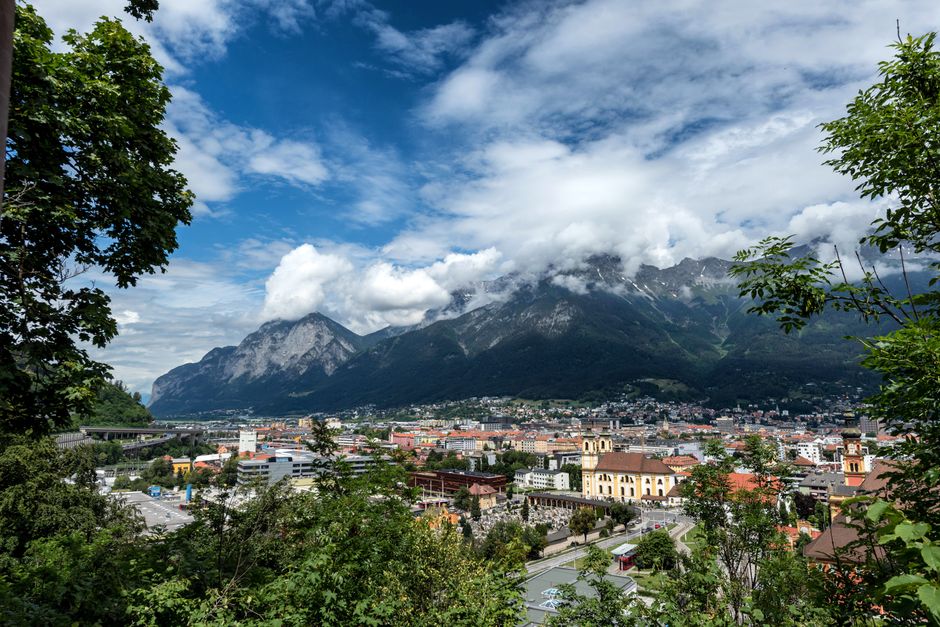 southern edge of the city, usually change hands between €1.8 million and €4 million depending on land and renovation state. Anything under €1.2 million up there is either tiny or needs a full rebuild.
Hungerburg, Igls or the Old Town: where the money goes
Hungerburg
This is the trophy postcode. The Hungerburgbahn funicular connects the district to the centre in about eight minutes, which sounds like a gimmick until you use it every day and stop caring about driving. Most of the luxury stock here is modern architecture, glass, clean lines, terraces pointed at the Nordkette. If you want the classic Alpine chalet look, Hungerburg will disappoint you. If you want to wake up with the mountain filling the window, nothing else in the city competes.
Igls and Vill
Igls is where the old Tyrolean money lives, and it has the atmosphere of a village rather than a district. The Igler Golf Club has existed since 1955, the Patscherkofel lift is minutes away, and the villas sit on generous plots with mature gardens. In January, note, the plateau catches more sun than the northern districts, which matters more than you would think at this latitude. Vill, just west of Igls, gives you slightly more land per euro and a quieter street life.
The Seegrube and Hötting crowd
Some buyers skip both and look at Hötting and the western slopes above the university quarter. Prices sit between the table’s mid and top bands, views are nearly as good as Hungerburg, and you walk to the old town in 20 minutes. I like it for buyers who want proximity over prestige.
The Old Town is beautiful and complicated
I feel obliged to be honest about the Altstadt, because it photographs beautifully and hides real friction. Most buildings there are under heritage protection, which means facade work, window replacements and even exterior colour changes need approval. Renovating a 400-year-old townhouse to modern insulation standards can take two years of paperwork before a single wall gets opened. Rental use is restricted in parts of the centre too, aimed at keeping actual residents in the historic core.
If you buy in the Old Town, budget for the fact that the building is protected, the staircase is probably listed, and your lawyer should read every clause twice. People do it and love it. People also buy a postcard and discover they purchased a restoration project.
What buying costs in Austria
Transaction costs here are not small, and foreign buyers regularly get surprised. The rundown for a typical purchase in Tyrol:
- Grunderwerbsteuer, the property transfer tax, at 3.5% of the purchase price.
- Land registry and registration fees, about 1.1%.
- Notary and contract drafting, typically 0.5% to 1%.
- Agent commission in Tyrol, normally 3%, and in practice the buyer pays it.
Add it up and you are looking at roughly 7.5% to 8% on top of the purchase price. On a €2 million villa, that is about €150,000 in costs, so factor it into your offer rather than discovering it at the notary’s office. Financing is available to non-residents, though Austrian banks want a solid paper trail, and a 30% down payment makes everything smoother. There are no restrictions on EU citizens buying property. Non-EU buyers need approval from the Tyrol state authority, which is usually granted for a primary residence but can complicate pure investment purchases.
Rental returns: do not expect much
Here is the part nobody puts in the brochure. Gross rental yields in Innsbruck run around 3%, sometimes less for luxury stock, because sale prices have climbed faster than rents. A €1.5 million penthouse might rent for €3,500 to €4,500 a month long-term. Do the maths and the yield is roughly 3% before costs.
Short-term letting looks more attractive on paper, and during the ski season and the Christmas market weeks, it genuinely is. But Innsbruck’s city rules on holiday rentals have tightened, and Tyrol’s zoning laws restrict secondary-residence use in tourist-heavy areas. Anyone who tells you a luxury apartment here is a licence to print Airbnb money is selling you something. Buy this market for lifestyle and capital preservation, and treat any rental income as a bonus.
Five mistakes I keep seeing buyers make
- Falling for the view and skipping the orientation. North-facing panorama properties at 600 metres altitude get dark early in winter. Sun side matters.
- Underestimating renovation timelines on older Tyrolean houses, where heritage, permits and craftsman availability stretch 12-month projects into 24.
- Ignoring the funicular, bus and lift proximity. The whole point of this city is that the mountain is close. A 25-minute drive to the lift quietly erodes that.
- Forgetting the 8% transaction load when negotiating, then discovering the cash they need for furniture is gone.
- Buying in late January during peak ski season, when competition and prices both spike. October and November are calmer.
Is Innsbruck worth it, then?
For a buyer who wants one place that combines genuine city life, serious skiing and long-term value, I think yes, and I do not say that about many Alpine markets. The fundamentals are honest here: a stable local economy, a university that keeps demand steady year-round rather than just in winter, and supply that is physically limited by mountains on every side. Prices have grown steadily rather than in bubbles, which is less exciting and much safer.
If I were buying with a budget around €2 million, I would shortlist three things: a modern penthouse in Hungerburg for the view and the commute, a villa in Igls for space and sunlight, and one renovation project in Hötting to test whether the charm is worth the paperwork. Pick based on how many winters you plan to spend here, not how good the listing photos look in summer.