I first started looking at Caribbean listings seriously in 2019, and real estate in St Maarten kept doing something the other islands didn’t: it matched the brochure. The water really is that color. The restaurants really do stay open past nine. And the flight connections, thanks to Princess Juliana International Airport, are good enough that you can fly in from Amsterdam or Miami without a two-day ordeal. That combination, livable infrastructure plus genuine beauty, explains why this 34-square-mile Dutch half of the island pulls a steady stream of North American and European buyers.
Still, prices here surprise people in both directions. Some assume the whole market is megayacht territory. Others expect Cayman-style pricing and are shocked when a decent two-bedroom water-view condo comes in at under $500,000. Here is what the market actually looks like right now, and where the smart money goes.
What Property Actually Costs on the Dutch Side
The honest answer is that real estate in St Maarten runs from surprisingly affordable to genuinely extravagant, sometimes within a ten-minute drive. A modest condo inland can trade at $280,000 while an estate in Terres Basses down the road asks $14 million. The market is really several small markets stacked on top of each other.
| Area | Typical Property | Price Range (USD) |
|---|---|---|
| Philipsburg | Renovated townhouse near the harbor | $300,000 to $500,000 |
| Simpson Bay | Two-bed waterfront condo | $450,000 to $750,000 |
| Cupecoy | Resort-style condo near the golf course | $600,000 to $1.4 million |
| Dawn Beach / Oyster Pond | Three- to four-bed hillside villa | $900,000 to $3 million |
| Indigo Bay | Modern four-bed villa with pool | $1.6 million to $4 million |
| Terres Basses | Private beachfront estate on large land | $4 million to $15 million+ |
Two things keep these numbers from sliding down. Buildable land near the coast is genuinely scarce, and since Hurricane Irma in 2017, rebuild
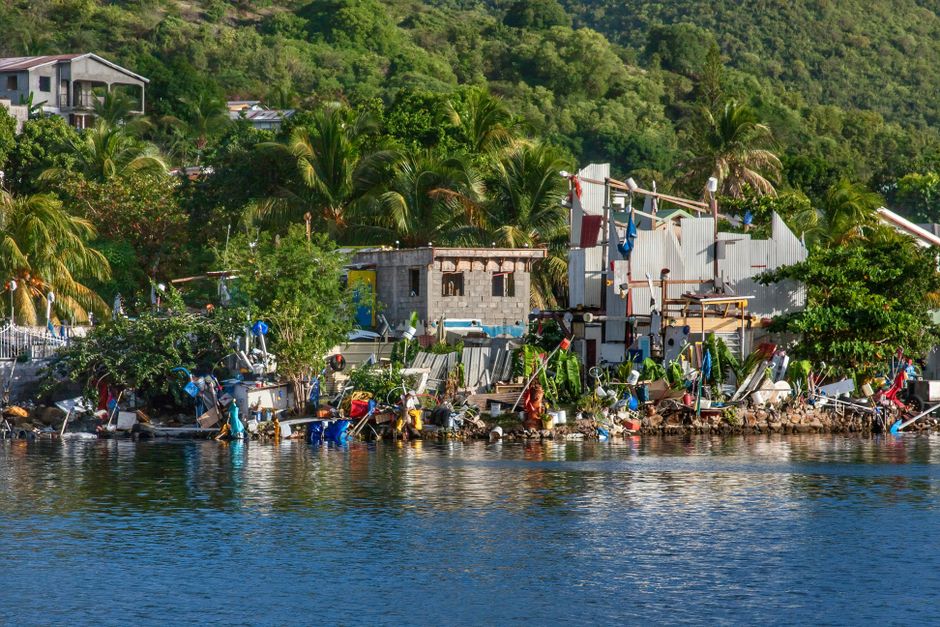 ing has favored larger, higher-spec homes. Inventory under $600,000 moves fast. I have watched well-priced Simpson Bay condos go under contract in under three weeks, which would have been unthinkable a decade ago.
Where to Buy: Neighborhood by Neighborhood
Simpson Bay
The workhorse of the market. Restaurants, the lagoon, marinas, and a fifteen-minute drive to the airport. Condos here rent well because guests want walkability, and you can realistically charge $200 to $350 a night in season for a nice two-bedroom. If you want rental income rather than a trophy address, start here.
Cupecoy and the Lowlands (Terres Basses)
Cupecoy sits at the quiet western tip near the border with French Saint-Martin, close to Mullet Bay golf. Expect gated complexes, clifftop views, and French-side shopping minutes away. Terres Basses is the top of the market, period. Huge lots, private beaches, and neighbors who arrive by boat. Villas here sell for $4 million and up, and the buyers are usually not financing.
Indigo Bay
My personal favorite if budget allows. It is five minutes from Philipsburg but feels like a private hillside. The villas are mostly modern builds from 2018 onward, which matters for insurance and peace of mind. Views over the bay are excellent and the area dodged the worst of the tourist bustle.
Dawn Beach and Oyster Pond
The quieter east coast. Dawn Beach has one of the best swimming beaches on the island and a large resort anchoring the area, which helps rentals. Oyster Pond is more boating-oriented, marina-side, and relaxed. Prices per square meter run noticeably below the Lowlands for comparable quality.
Philipsburg
Cheap, functional, and improving. The capital took a beating from Irma and from the cruise-ship economy shifting, but renovated townhouses under $500,000 appeal to a specific buyer: someone who wants to live year-round, run a small business, and not worry about strata fees. It is not a vacation-home play. It is a life-here play.
Can Foreigners Buy? Yes, and Easily
This is where real estate in St Maarten beats much of the region. Because the island is part of the Kingdom of the Netherlands, property law follows Dutch civil law, and foreigners get the same freehold ownership rights as locals. No residency permit to buy. No local partner required. No leasehold games like on some neighboring islands. You own the dirt, fee simple, with a registered deed handled by a local notary.
Closings typically run six to ten weeks from accepted offer to key handover. The notary does the title search, confirms there are no liens or encumbrances, and holds funds in escrow. Buy through a local attorney anyway. It costs a few hundred dollars and it has saved more than one client from an inheritance dispute nobody mentioned at the viewing.
Taxes and Closing Costs, in Plain Numbers
Run the math before you fall in love with a listing, because transaction costs are real.
- Transfer tax: roughly 6% of purchase price, paid by the buyer at closing. Verify the current rate with your notary, as it has shifted in recent years.
- Notary fees: around 1% to 1.5% of the price.
- Agent commission: usually 5% to 6%, paid by the seller in most transactions.
- Annual property tax: effectively none, which is a genuine and underrated draw compared to, say, Florida or the French side.
That last point deserves a bigger font, honestly. No meaningful annual holding cost changes the rental math enormously. A villa that would carry $30,000 a year in taxes elsewhere costs you almost nothing to sit on here. Factor in closing costs of roughly 7% to 8% on the buyer side and you have the full picture.
Rental Income: What Owners Actually Earn
Short-term rentals work on this island, and they work better than most buyers expect. The airport brings direct flights from the US, Canada, and Europe, and the season runs longer than on many islands because the Dutch side has a real year-round restaurant and nightlife scene.
Well-managed two-bedroom condos in Simpson Bay achieve occupancy in the 55% to 70% range annually, with nightly rates from about $150 in shoulder season to $400 or more over Christmas and New Year. Management companies charge 15% to 25% of gross revenue, and yes, you should use one unless you live here full-time. Guests expect hotel-grade service, and the island has a functioning short-term rental licensing framework, so play by the rules. Gross yields of 5% to 8% are realistic in the condo segment. Luxury villas run lower, often 3% to 5%, but they appreciate better.
Hurricanes and Insurance: The Uncomfortable Part
Irma in September 2017 flattened parts of the island, and pretending otherwise would be dishonest. What matters for you as a buyer is what changed after. Building codes tightened, insurance underwriters got pickier about roofs and shutters, and the rebuild produced a housing stock that is, on average, better engineered than what it replaced.
Budget 1.5% to 3% of rebuild value per year for comprehensive hurricane and flood coverage, and know that insurers will demand proof of impact-resistant windows and proper roof tie-downs on anything post-2018 standard. An older villa that looks charming may cost you double to insure. That $600,000 hillside fixer-upper can quietly become a bad deal once the insurance quote lands.
Practical Tips From People Who Have Done This
- Use a local agent who actually lives on the Dutch side. Cross-border listings get stale and mispriced.
- Never wire money before the notary confirms escrow arrangements. Wiring fraud hits Caribbean transactions every year.
- Check strata (VvE) financials on condos before offering. Deferred maintenance on shared buildings is common post-storm.
- Visit twice, once in high season and once in September. The island is a different place, and you should love both versions.
- Get a bank account early. Local financing for non-residents exists but is slow, so start the paperwork the week you get serious.
Quick FAQ
Is it cheaper to buy on the Dutch side or the French side?
Roughly comparable at the mid-market level, but the structures differ. The Dutch side has no meaningful annual property tax and a simpler transaction process under Dutch law. The French side brings French bureaucracy and succession rules that can complicate resale. Most non-European buyers find the Dutch side easier, full stop.
Can I get residency by buying real estate in St Maarten?
Not automatically, no. Property ownership helps support a residency application, but you apply separately through immigration channels, and the property itself is not a formal investment-citizenship route the way some programs market themselves elsewhere.
What is the minimum sensible budget?
For a rentable, pleasant condo in a managed complex, plan on about $450,000 plus around 8% closing costs. Below that you are buying compromise, either on condition or on location.
The short version: real estate in St Maarten rewards two kinds of buyers, the one who wants hassle-free rental income from a $500,000 Simpson Bay condo, and the one who wants a $5 million Terres Basses sanctuary with no annual tax bill. The middle is workable too, but do the insurance and strata homework before you sign anything. Pick your lane, hire a local notary and attorney, and the rest of this island takes care of itself.